
Safe and Original Don’t Mix
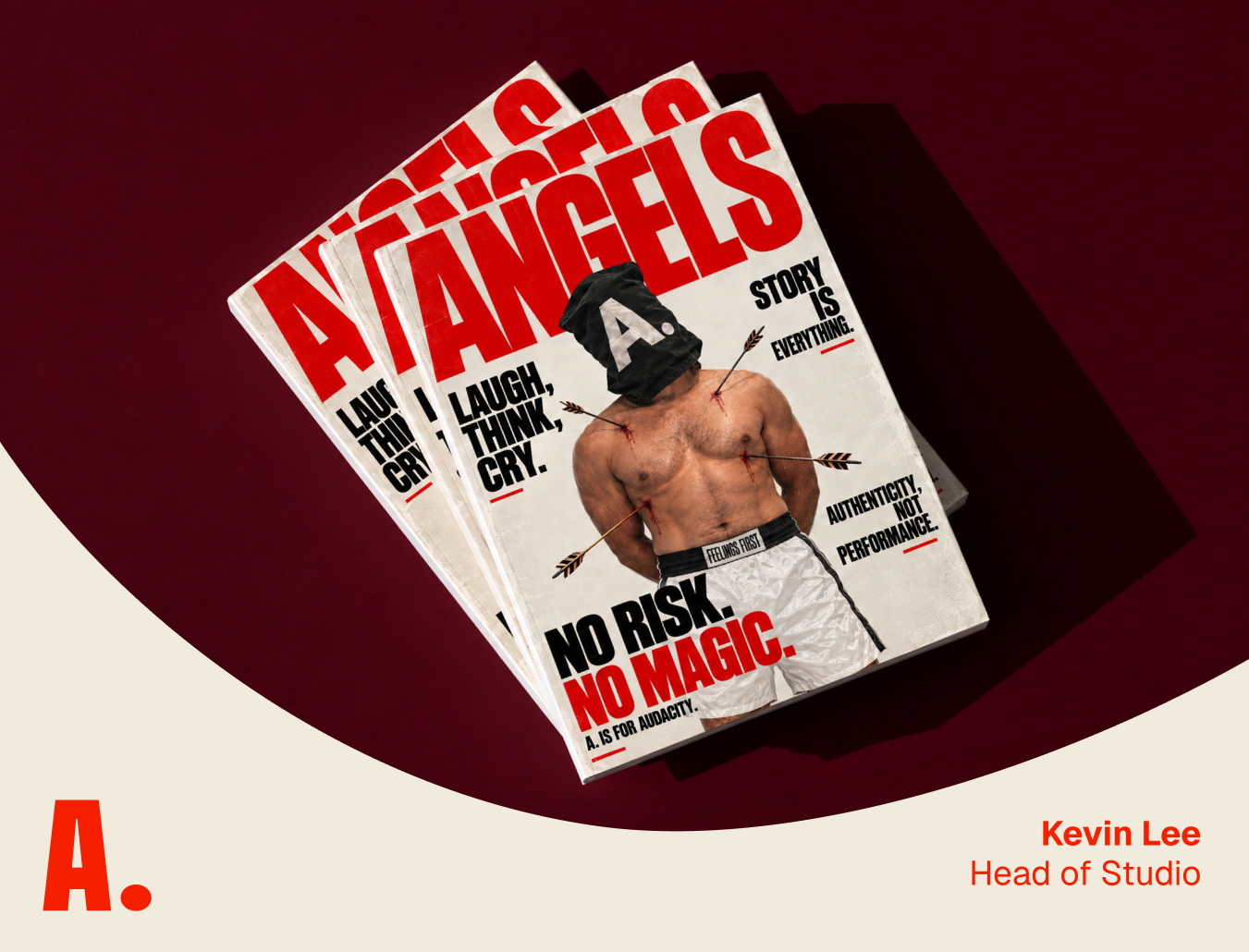
One sentence from a Mad Man
The other day a short Instagram reel about George Lois landed in my feed. In under a minute he said the thing I've been trying to say for years, only shorter and with a lot more swagger.
"You can't be original and safe at the same time."
I watched it three times. Then I sent it to the whole team. Then I sat down to write this, because that one line pretty much explains why Angels exists.
Who was George Lois?
If you don't know the name, you know the work. Lois was one of the people behind the Creative Revolution on Madison Avenue in the late fifties and sixties, the world that later inspired Mad Men.
He gave us "I Want My MTV" and turned a struggling cable channel into a cultural event. He came up with the name Lean Cuisine. He sold Xerox copiers by showing that a chimpanzee could use one. And during his years with Esquire he made a run of covers so good that 38 of them now sit in the permanent collection of MoMA in New York.
The most famous one shows Muhammad Ali, convicted for refusing the Vietnam draft, posed as the martyr Saint Sebastian with arrows in his body. Lois later said it combined race, religion and war in a single image. It was a magazine cover. It was also one of the most powerful pieces of communication of the century.
Lois died in 2022, aged 91. And he understood something our industry keeps forgetting. Advertising, is an art, not a science. He saw trends as a search for something safe, and thought relying on them led straight to the great void of forgetfulness.
B2B's comfort zone
Walk round any trade show. Scroll any industry feed. Open the website of almost any company in tech, energy, manufacturing or property. Swap the logos around and you'd struggle to notice who’s who.
The same drone shot over the same glass building. The same team laughing at the same laptop. The same words: innovative, sustainable, trusted, future-ready, end-to-end. None of it is wrong. All of it is safe. And safe work is invisible work. It sails through every sign-off and nobody remembers it on Monday.
B2B has always had a handy excuse. Our buyers are rational, we tell ourselves. Engineers, procurement teams, CFOs. They want specs, not stories. Well, we've worked with engineers for well over fifteen years, and I can tell you they laugh, worry and get moved like everyone else. Decisions get justified with spreadsheets. They get made with gut feeling, trust and memory.
Now a new wave of sameness is arriving. AI can produce a perfectly competent brochure, explainer or LinkedIn post in seconds. Competent is about to become free, which means it's about to become worthless as a way to stand out. When anyone can “produce average” at the press of a button, the only work worth paying for is the work no button could have made.
Five beliefs Lois would have signed
At Angels we work by five beliefs and reading about Lois, I realised he'd have signed off on every one of them, probably adding a few choice words of his own.
Laugh, think, cry
The job is to make people feel something. Ali with arrows in him makes you angry, then makes you think. Rock stars whining down the phone for their MTV made you laugh. If a piece of communication doesn't move people somewhere, it hasn't done anything at all. In B2B we aim for all three, sometimes in one film. A story about network security can make an engineer smile. A story about a dairy farmer can put a lump in a boardroom member’s throat.
Story is everything
Lois always told young creatives to start with the words. Pictures come after. We'd go one step further and say start with the story. Every(body) company has one, buried under the product sheets: why it began, who it serves, what it's fighting against. Our job is to dig it out and tell it properly.
No risk, no magic
This is Lois in his purest form. You can't be creative, original and safe at the same time. Every piece of work we're proud of had a moment in the meeting when someone went quiet and asked "are we sure about this?" That silence is where the magic lives. Lois talked about fighting wars with clients to get great work made. We'd put it more politely. We'd rather argue with you about an idea than agree with you about nothing.
Authenticity, not performance
Lois was suspicious of research that asks people what they think they want. Trust your own instincts, he said, your own intellect and your own sense of humour. Too much corporate communication today is a performance. Purpose statements written to please. Values that sound borrowed. A tone of voice copied from whoever won the awards last year. People can smell it a mile off. The braver move is simply to sound like yourself.
A. is for Audacity
Why not be audacious? Why not stand out and take a risk? Audacity is opening a B2B film with a joke. It's putting a farmer, not a CEO, at the centre of the story. It's saying the thing your competitors are too careful to say. And it's the thread through the other four. Laughing, crying, telling the real story, taking the risk and being yourself all take a bit of nerve.
Why we're here
We're not here to make more content. There's more than enough of it already. We're here to make the piece people stop for. The film someone mentions at dinner. The link a buyer forwards to a colleague with "have you seen this?"
That kind of work has to be original, because it comes from the real story of the company rather than a template. It has to be human, because it's made by people who are genuinely curious about other people. And it has to be away from the pack, because that's the only place anyone will notice you.
The next wave of B2B communication won't be won by whoever publishes the most. It will be won by whoever has the nerve to be different and the craft to make it land. Lois knew that sixty years ago. Now the AI content circus has just made it urgent.
A small test
Lois once said that great advertising can make food taste better. I'd say great B2B communication can make a company's own people feel proud to work there, and make a buyer feel they've chosen a partner rather than a supplier. That's worth a little risk.
So here's a test. Look at the last thing your company put out. Could a competitor have published it with their logo on it and nobody noticed? If the answer is yes, it was safe.
Our best projects started with an awkward first email.
Maybe you don't know what you want yet.