
The Scene I Can't Feel Anymore
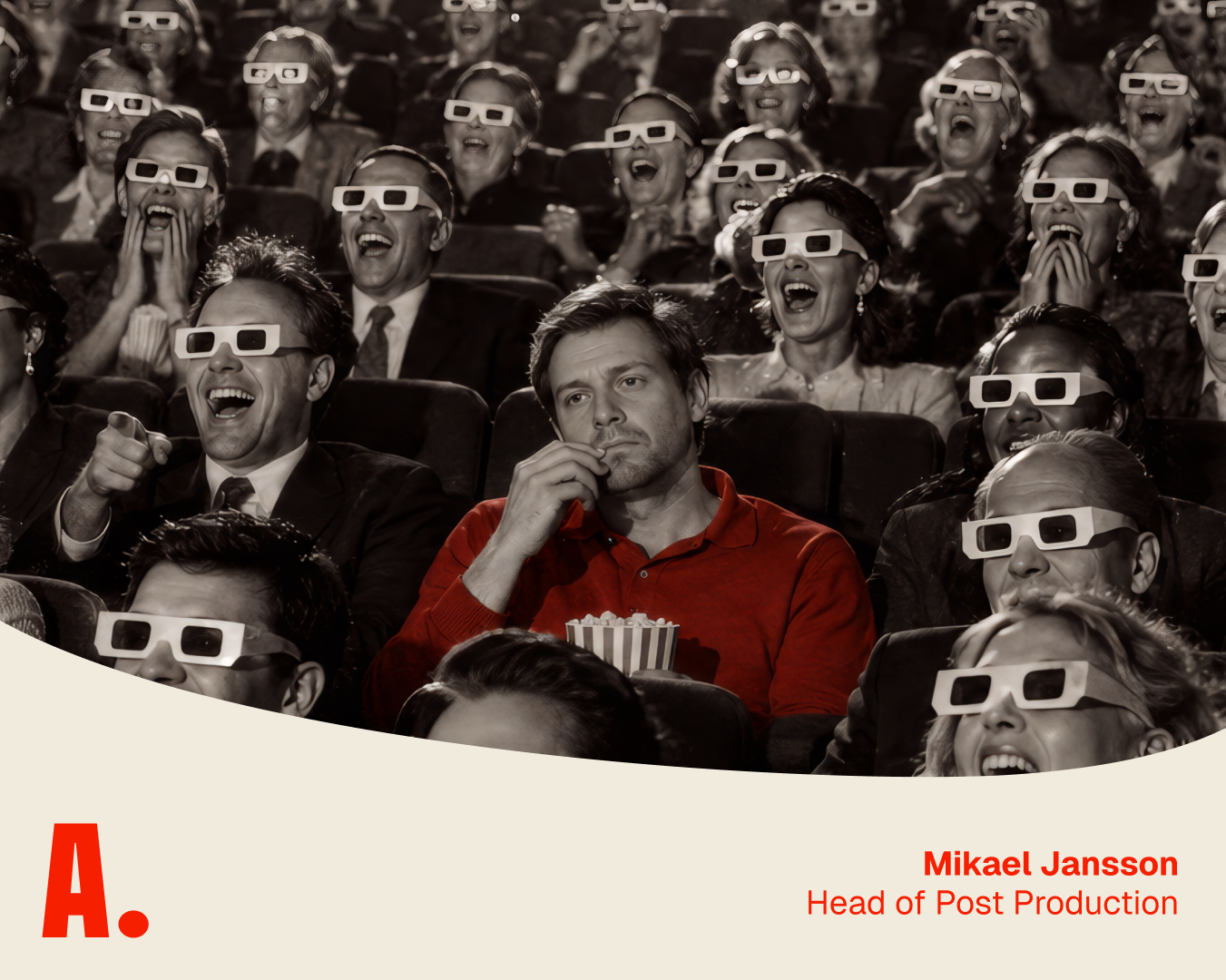
There's a joke in a project I edited last year that used to make me laugh every single time. Now I can watch it stone-faced. Not because it stopped being funny: the audience still laughs, every time, in every screening. It's because I've watched those same three seconds probably two hundred times.
As a video editor, this happens to me more than I'd like to admit. You take a piece of footage, a punchline, a gut-punch moment, a tear-jerker of a scene, and you sit with it. You trim a frame here, nudge a cut there, listen to the same line delivery on loop until you can predict the exact millisecond someone's voice cracks. By the time the project ships, I've built a strange kind of scar tissue over content that's designed to make other people feel something.
It's a bit like hearing your favorite song so many times it becomes wallpaper. Except in my job, that "wallpaper" is often the emotional core of what we're making: the moment we need to land. And I'm the one deciding, hundreds of times over, exactly how it lands for an audience who will only ever see it once.
That gap is the strange part of the job nobody really talks about. I'm the person furthest from the "first watch" experience, yet I'm the one shaping it most. I have to reconstruct, almost artificially, what it feels like to see something fresh: to imagine an audience laughing at a joke I can no longer hear as funny, or tearing up at a moment I've become numb to through sheer repetition. It's a weird kind of professional empathy: feeling for people who feel something I no longer can.
I've learned to work around it. I bring in fresh eyes deliberately, a colleague who hasn't seen the cut, someone outside the project entirely, sometimes just my partner at home with zero context. Their reaction is the only honest data point I have left. If they laugh, we keep it. If they go quiet at the right moment, we know it worked. My own reaction stopped being reliable a long time ago.
What's stayed with me, though, is what this does to your relationship with your own work. You'd think spending that much time with something would make you love it more. Sometimes it's the opposite: you finish a project relieved to finally not watch it again, even if you're proud of it. Other times, oddly, a scene reveals something new in the hundredth watch that you missed in the first: a look on someone's face, a pause that lands differently once you know where the story is going.
I think that's the part of this job people don't picture when they imagine "video editor." It's not just technical trimming and timeline juggling. It's an ongoing negotiation with your own numbness: trying to protect an audience's first, unrepeatable experience of something, using a version of yourself that's already had that experience worn thin by repetition.
So if you've ever wondered why editors seem strangely detached in a screening while everyone else is laughing or crying: that's not boredom. That's just what two hundred watches does to a moment. We've already given up our own reaction so the audience can have theirs.
Our best projects started with an awkward first email.
Maybe you don't know what you want yet.